


A Physical Therapist’s Guide to Plantar Fasciitis
- Mar 4
- 5 min read
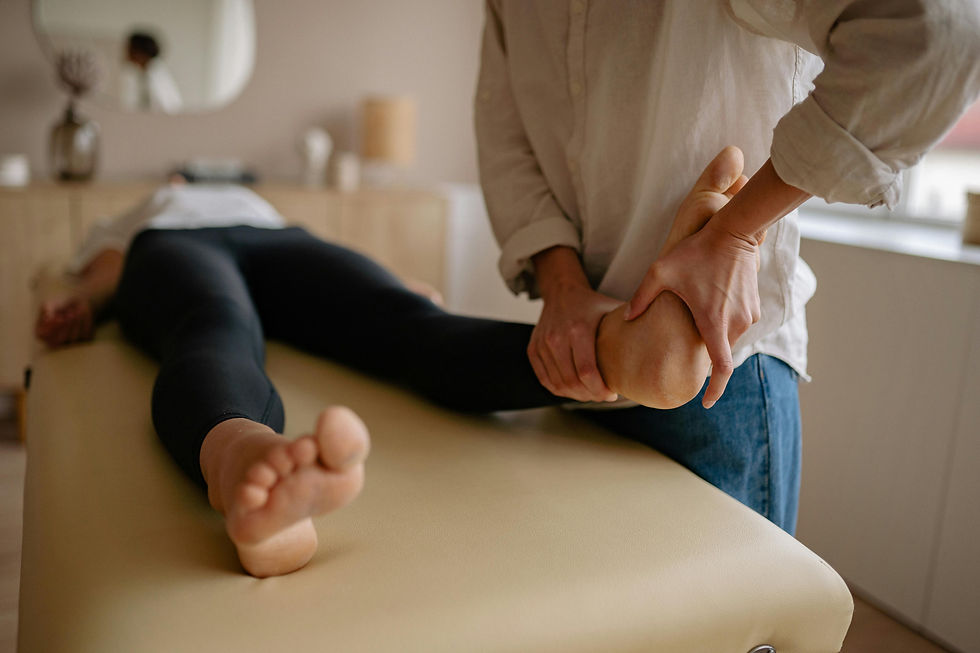
Plantar fasciitis is a very commonly seen orthopedic condition in a physical therapy clinic. Research shows plantar fasciitis is the leading cause of heel pain and is most commonly associated with careers that involve a lot of standing, weakness in lower leg and foot muscles, and pes planus (flat footedness). This condition can be very debilitating and extremely painful, and if you have to work on your feet all day, it can make your life miserable. Thankfully, there are things you can do on your own to help!
Firstly, let's talk about what plantar fasciitis is. The plantar fascia is a band of white connective tissue that anchors on your heel bone on the bottom of your foot and spreads to your toes. It can become irritated with overuse, injury, or weakness. The -itis ending of fasciitis means that the structures are inflamed, however many cases of plantar fasciitis can be attributed to irritation from overuse and degeneration of the tissue.
This pain pattern often manifests as a sharp pain at the heel, particularly when you first stand after being non-weight-bearing for a while, such as after sleeping or after sitting down for a while. This happens because the plantar fascia tightens when we are non-weight-bearing, and suddenly stretching it when we stand causes pain. This pain may ease off a bit when you move around, and the fascia gets stretched out, but then the pain increases again after standing for a while.
Plantar fasciitis can be very painful and debilitating. Try these exercises and stretches if you have been diagnosed with plantar fasciitis, or suspect that you have it, and hopefully they can bring you some much-needed relief! Remember to always see your doctor before starting any new exercise programs and for a complete diagnosis and medication interventions.
Gastroc stretch
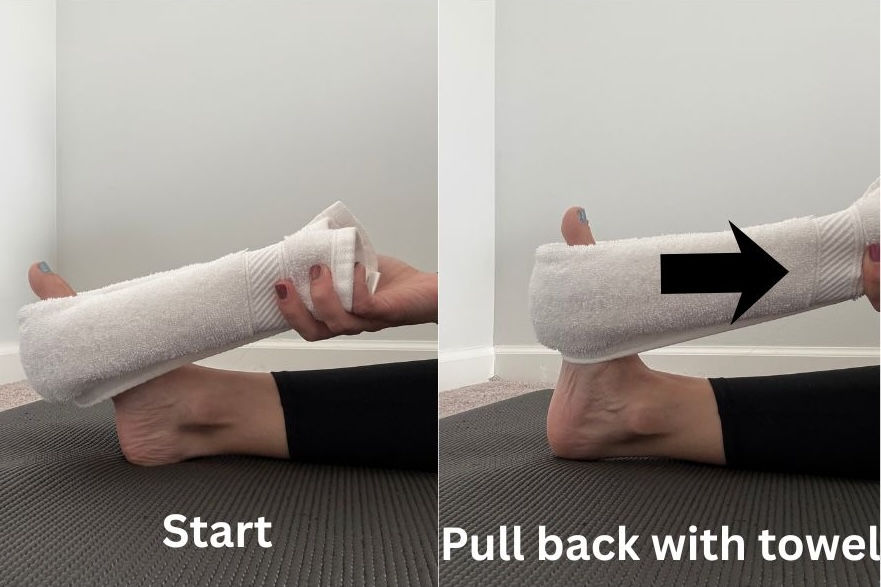
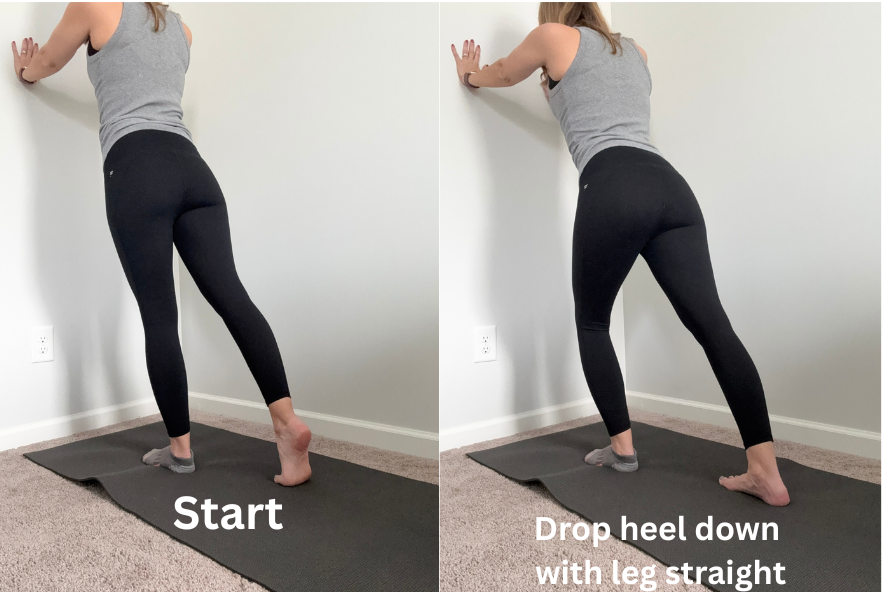
The gastrocnemius is the calf muscle, and if it's tight, it pulls on the back of our heel to decrease the movement of our foot. There are a lot of ways to stretch the gastroc. One common way is to be sitting with your leg straight in front of you, wrap a towel around the ball of your foot and pull back until you feel a stretch in your calf. You can also do this in standing if you have a slant board or just standing with your leg extended behind you and leaning forward (see pictures below). Hold this stretch for 30 seconds and do it 3 times.
Soleus stretch
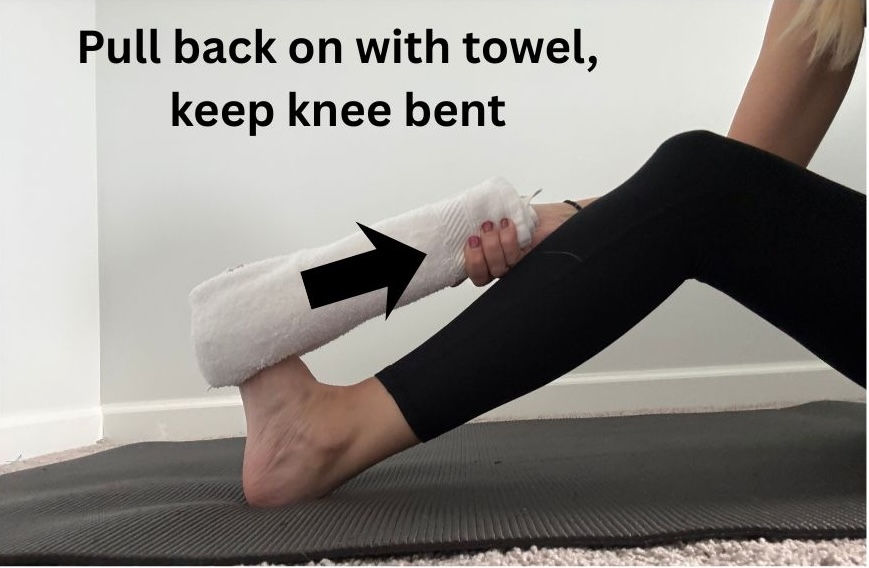
The soleus is the smaller muscle right underneath the gastroc muscle. To stretch this muscle, you do the same stretch as for the gastroc stretch mentioned above, but with your knee slightly bent. So, for example, if you are doing the towel stretch method, you’ll sit with your leg out in front of you, bend your knee slightly, and then use the towel to pull your foot back towards you. It will not feel as intense a stretch as the gastroc stretch simply because this muscle is smaller.
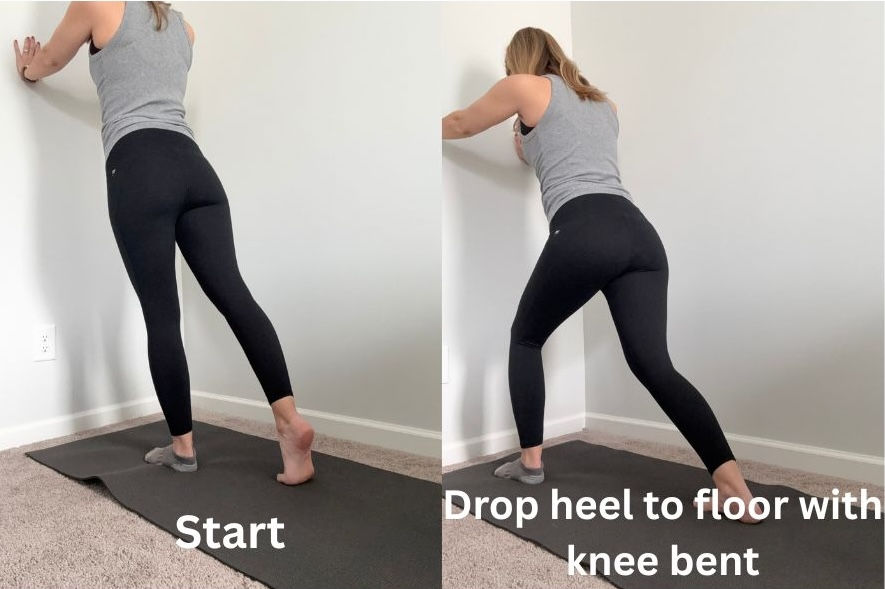
Foot arch stretch
To stretch the actual arch of your foot, sit with your ankle crossed over your opposite knee. Pull your foot towards your shin, and also pull your toes back as well to get this stretch along the bottom of your foot.
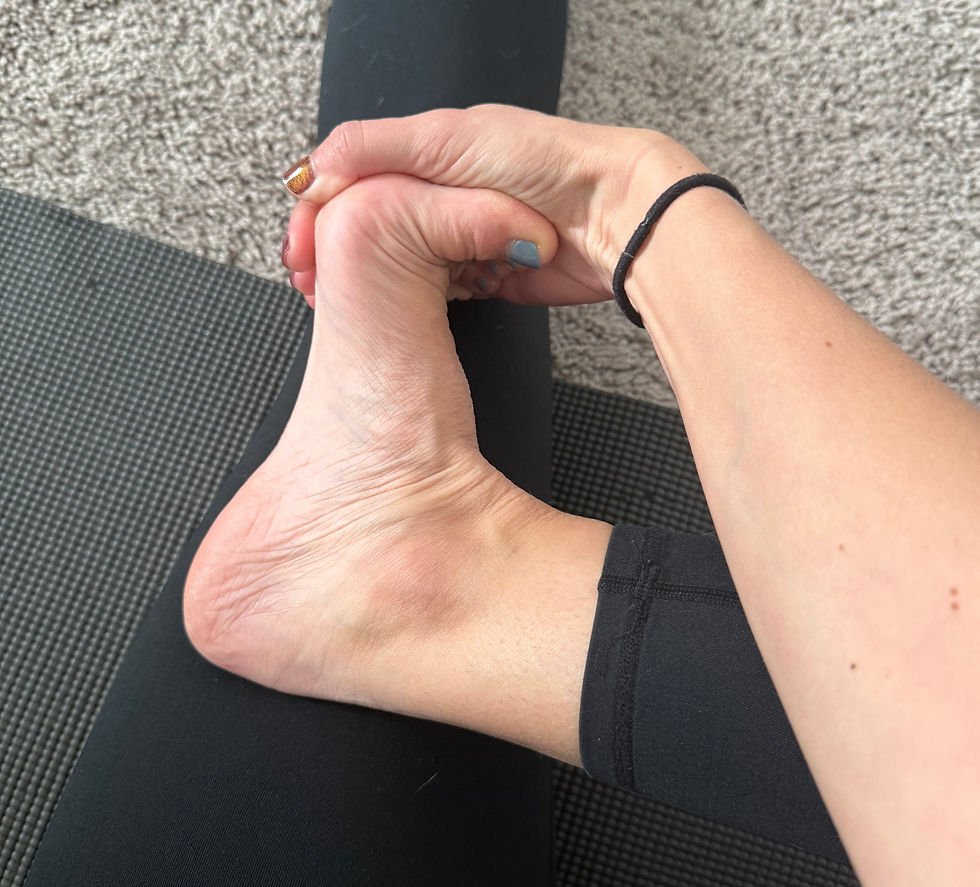
Towel scrunch
This is for strengthening of the bottom of your foot to add more support. Sitting with a towel on the floor, using your bare foot, scrunch the towel with your toes as though you are trying to pick it up. Do 30 scrunches or set a timer for 1 minute and just scrunch away!
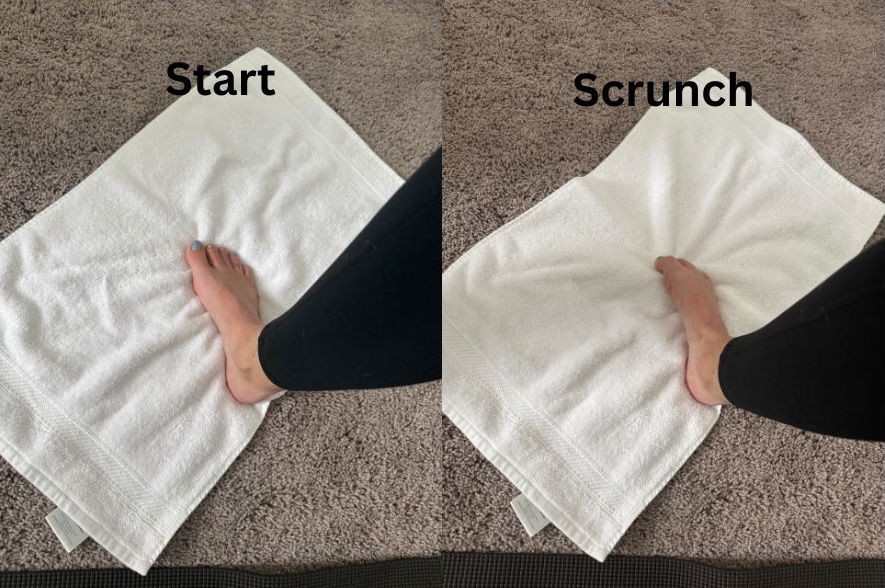
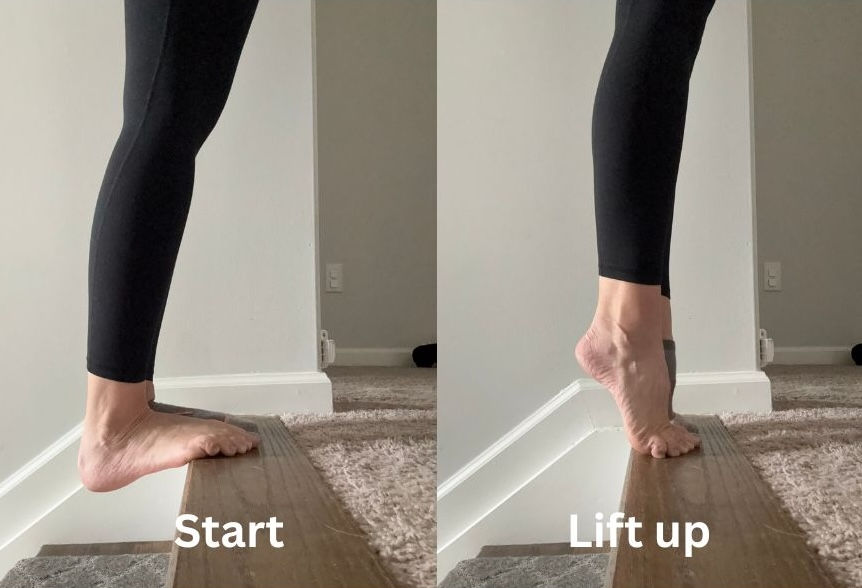
Calf raises
After stretching, it's important to strengthen. Calf raises can be done on the floor or on a stair. Make sure you are holding onto something for support, such as a wall, counter or chair, since it's easy to lose your balance when doing this. Standing straight up, just lift your heels off the floor, standing on your tiptoes. Go slow when coming back down! Push up onto your toes, hold this position for 3 seconds, and then count to 3 as you slowly lower back down into the starting position. To advance this exercise, stand with the balls of your feet on the edge of a stair with your heels hanging off. Instead of your starting position being standing flat-footed on the floor, your heels will be hanging slightly lower than your toes, increasing the angle of movement.
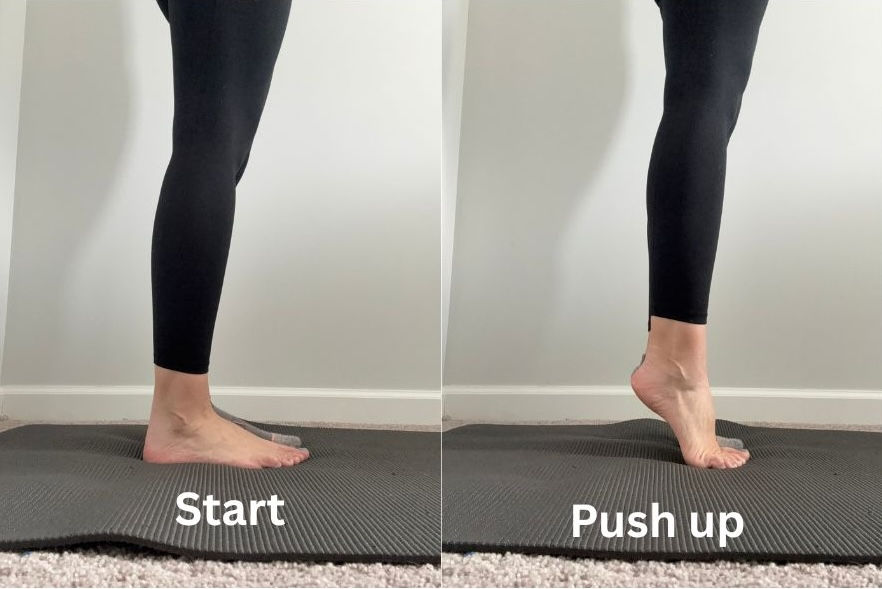
Anterior, Lateral, and Medial Ankle Strengthening
It’s important to strengthen the entire ankle to add support to the foot and ankle. For this exercise, you may need an exercise band to feel the muscles working. Tie a loop at one end of the band, so your foot can fit through it. You are going to be pulling against the band inwards, outwards and back to strengthen the muscles around your foot and ankle. Be mindful that you are using your ANKLE to do the movement and not rotating your entire leg/hip. The movements are small! See the pictures below for a visual of how to arrange the band and the direction to move your foot!
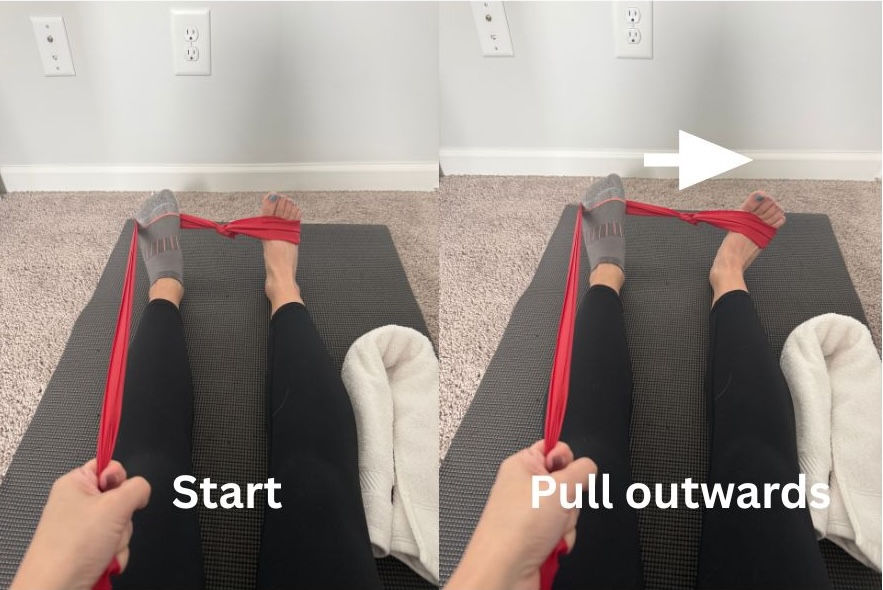
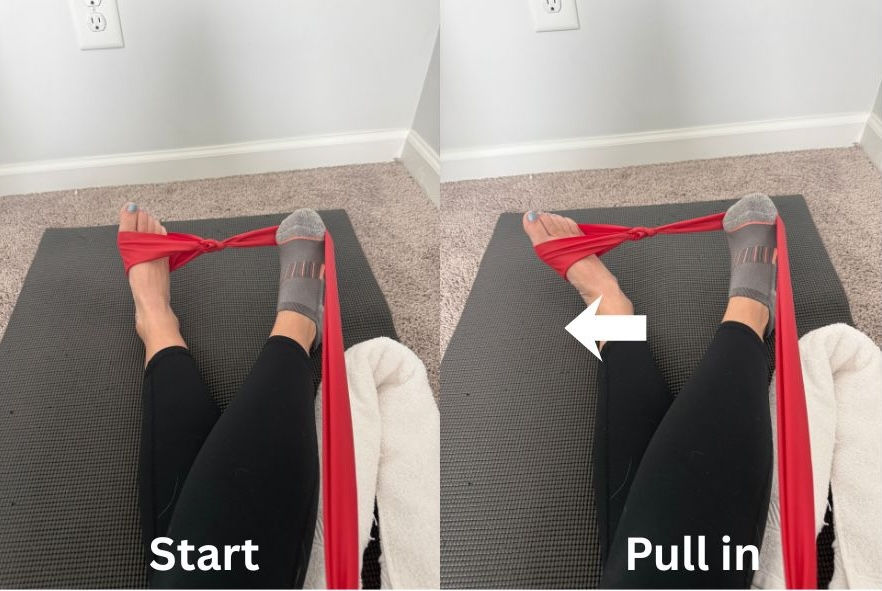
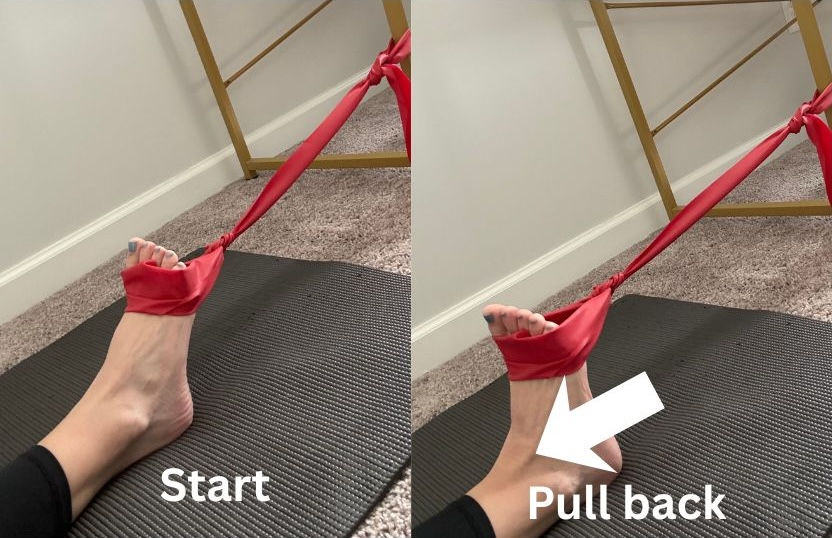
Self massage
You can’t massage your own back, but you can massage your own foot! Using your thumbs or even a guasha tool, you can dig into the plantar fascia to help stimulate blood flow and loosen up any tight structures. Just be sure not to overdo it! Don’t dig and push so hard that you can’t walk the next day. You’ll have to use your own judgment on this one. Massage for 5-10 minutes a day or whenever you need it to relieve pain.
Frozen water bottle rolling
Ice helps to decrease inflammation, and the ridges on a water bottle can provide a bit of a massage. Rolling your foot over a frozen water bottle can both help to numb the pain from the ice and relieve it from the massage and loosening up structures. Like the self-massage, don’t go overboard on this! Push down on the water bottle gently and roll over it for a few minutes. Don’t push down so hard that you are in agony.
Rest
Plantar fasciitis is an injury, and all injuries require a certain level of rest for healing. If you are an avid runner or walker, you may need to take a little time off to allow healing and prevent further damage to the plantar fascia. Try switching to lower-impact activities if you can, such as cycling or stationary bikes, which keep you moving without the higher impact to your feet.
Finally, you may also want to look into new shoes and arch support. If you have a flat arch, called pes planus, the fascia on the bottom of your foot is naturally going to take more of a beating with each step you take because your arch is flat and therefore your plantar fascia is under more tension with each step. Look for shoes with good arch support or find shoe inserts that provide arch support.
Plantar fasciitis is a common and painful condition that can severely limit your activity. It can make it hard to stick to your movement and exercise goals. Try out these stretches and strengthening exercises and hopefully you’ll be feeling relief very soon! Always remember to consult your doctor or physical therapist for full testing, diagnosis and treatment.


Comments